Six practical ideas
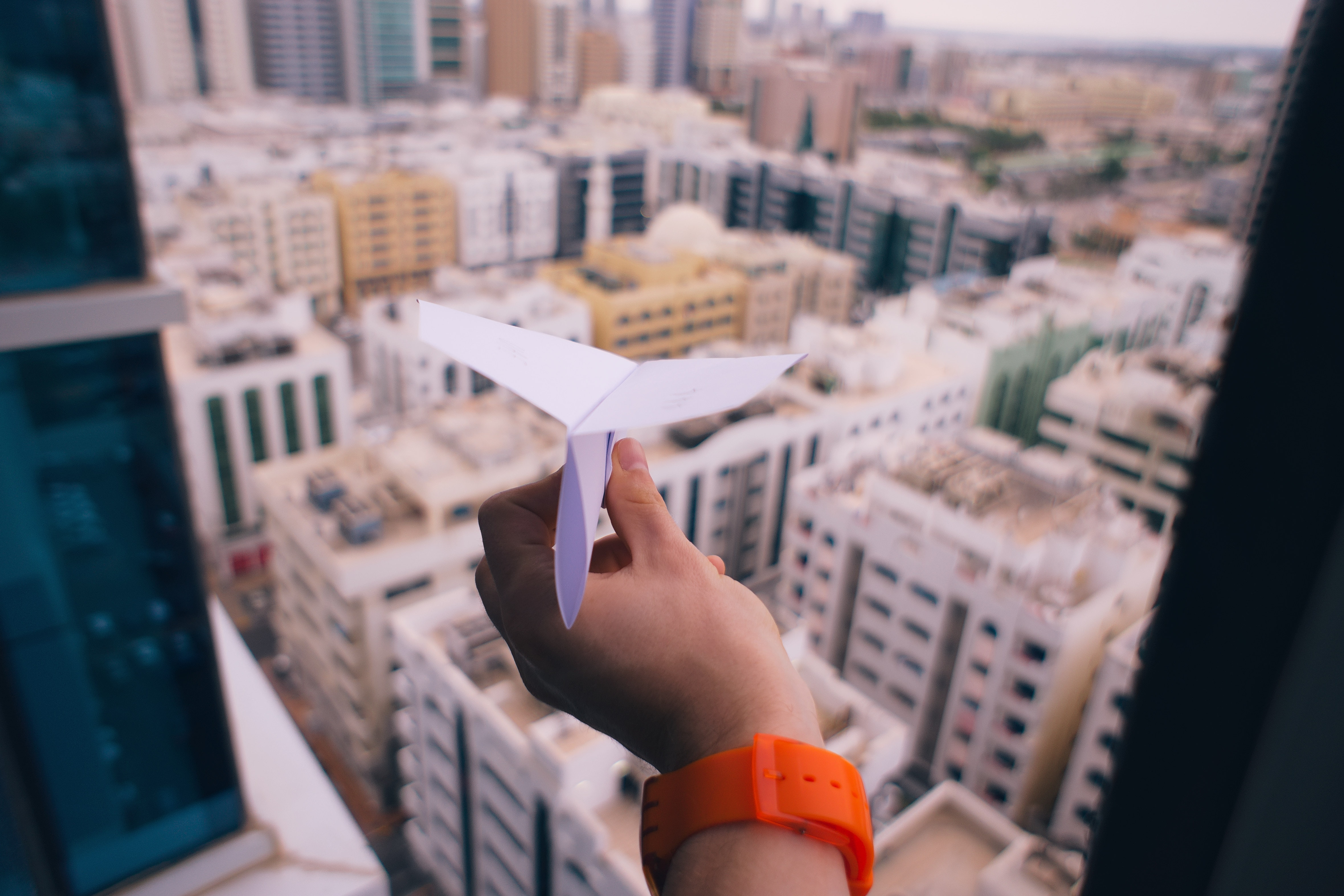
Test paper aircraft
Change one feature and measure distance or stability.
Keep a sky log
Record aircraft, clouds, wind and questions for one week.
Read simple weather
Compare an observation with what the sky actually looks like.
Design an airport
Place runways, taxiways and terminals around stated constraints.
Trace a journey
Research aircraft, route, time zones, weather and destination.
Present one discovery
A drawing, model or two-minute explanation consolidates learning.
Turn play into an experiment
Before each activity, make a prediction. Change one variable where possible, observe the result and record it. This simple cycle builds scientific thinking.
With paper aircraft, for example, change wing area or centre of mass—not five features at once—then compare repeated launches in a safe indoor space.
Connect activities to real aviation
An airport design can introduce wind direction, runway separation, noise and passenger movement. A sky log can lead to weather, navigation and environmental questions.
Adults do not need every answer. Model how to find a credible source and how to say ‘we need to check’.
Keep it safe and private
Supervise tools, launches and online research according to age. Do not visit restricted areas or use live tracking to identify or approach individuals.
Share completed work privately unless the young person and parent deliberately choose otherwise. Learning does not require a public profile.
- 01Chooseselect one question and an age-appropriate activity
- 02Predictsay what you think will happen and why
- 03Testobserve carefully and change one variable
- 04Explainrecord the result and the next question
Educational sequence only. Apply the appropriate approved guidance and see references below.
Reflection prompt
Reflection promptWhat did our evidence show, and what would we change in the next test?
Explore together
Continue the exploration with guided aviation activities and role models. Explore the HKPAPA Aviation Adventure Programme.