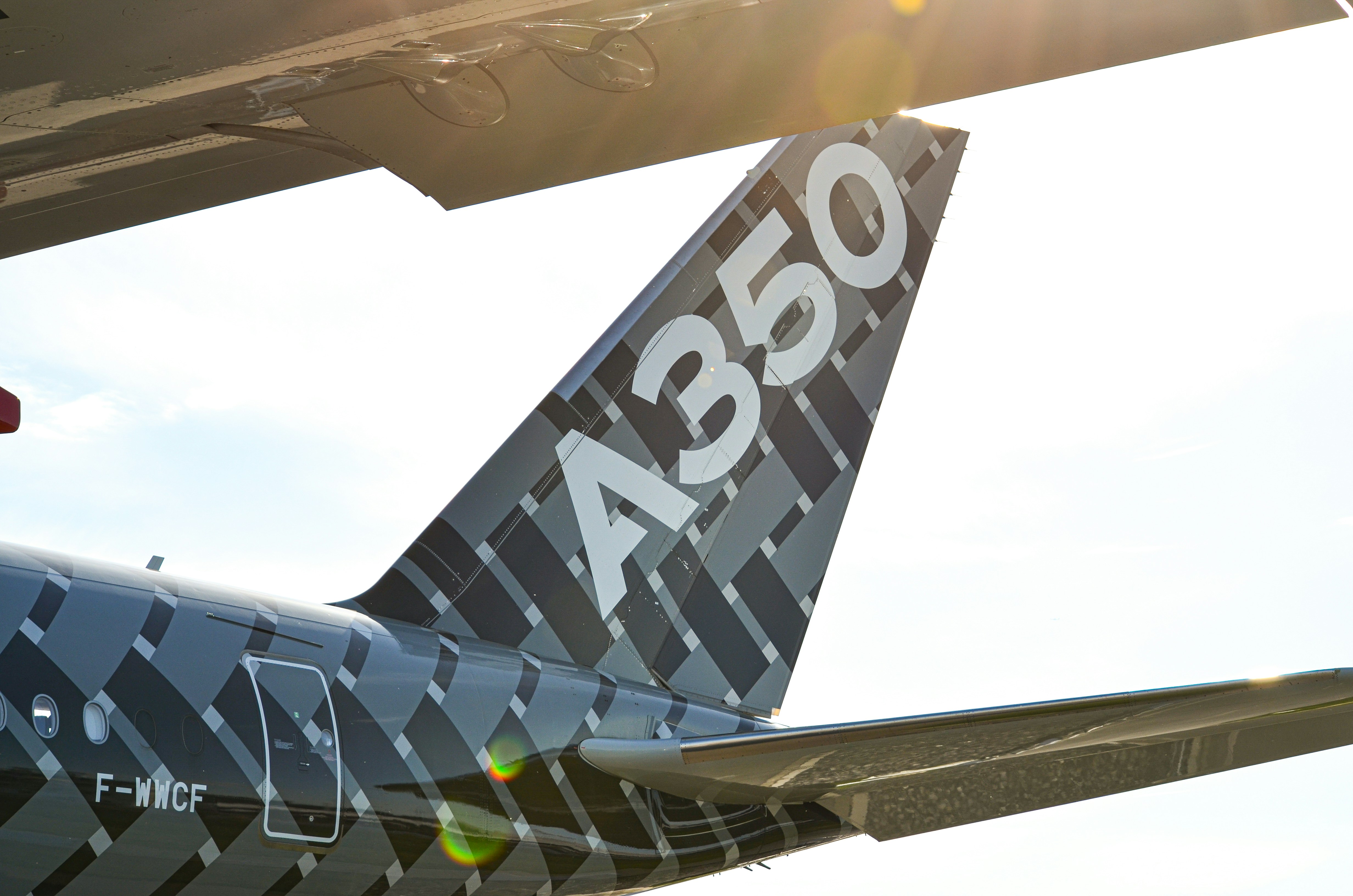
Six technologies that define the A350
Carbon-fibre structure
More than half of the airframe by weight uses carbon-fibre-reinforced polymer, helping reduce mass and corrosion.
Adaptive aerodynamics
A high-aspect-ratio wing and movable trailing-edge features optimise shape across phases of flight.
Efficient propulsion
Rolls-Royce Trent XWB engines were designed specifically around the aircraft’s long-range mission.
Integrated avionics
Networked computing modules let multiple aircraft systems share processing and information efficiently.
Connected maintenance
Onboard sensors and health-monitoring data help engineers identify faults and plan work earlier.
Human-centred cabin
Lower cabin altitude, humidity control, quietness and large windows use technology to improve the journey.
The airframe is a system, not a collection of gadgets
Airbus states that carbon-fibre-reinforced polymer accounts for 53 per cent of the A350’s structure by weight across the fuselage, wings and tail. Composites can reduce weight and resist corrosion, but their real benefit appears when the entire aircraft is designed around them rather than when one metal panel is simply replaced.
The long, slender wing reduces induced drag, while advanced control surfaces can alter the wing’s effective shape in flight. Efficient aerodynamics matter enormously on a long sector because a small improvement is repeated for thousands of kilometres.
Digital integration supports crews and engineers
The flight deck combines large displays, fly-by-wire controls, head-up-display capability and touchscreen-enabled interfaces. Technology is valuable only when it helps people understand the aircraft and manage workload, so interface design and common Airbus philosophy are as important as processor speed.
Behind the displays, Integrated Modular Avionics allows computing resources to support several functions in a controlled architecture. Sensors continuously record system condition. Selected information can help maintenance teams diagnose faults, prepare parts and reduce avoidable delay when the aircraft reaches the ground.
Passengers experience engineering indirectly
Most passengers will not see a composite frame or avionics cabinet, but they may notice quieter operation, a lower cabin altitude, large windows and lighting designed around long journeys. These are not cosmetic extras: cabin pressure, air, noise and temperature influence comfort and fatigue.
“High-tech” should not mean “immune to faults”. The A350 still depends on rigorous certification, maintenance, software control, crew training and operator procedures. Its achievement is that many technologies work together as a coherent, efficient long-range platform.
- 01Lightenuse composites and advanced materials strategically
- 02Optimiseshape the wing and engines around long-range efficiency
- 03Integrateconnect flight, system and maintenance information
- 04Supportturn technology into useful decisions for crews, engineers and passengers
Educational sequence only. Apply the appropriate approved guidance and see references below.
One useful question
Reflection promptWhich A350 technology creates the most value: the feature passengers can see, or the integration they never notice?
Keep learning
Discover more aircraft engineering and flight-deck technology through HKPAPA aviation education. Explore the Knowledge Hub.